Home / COUNT–GROW–THRIVE
Our model

COUNT–GROW–THRIVE

From identifying a need to verifying progress: one child, one record, one plan, one verified result.

From identifying a need to verifying progress

COUNT–GROW–THRIVE

COUNT–GROW–THRIVE is ActionReach’s way of organising support around the individual child. It connects early identification and legal identity with coordinated action across essential services, then asks whether progress has actually occurred and whether it is likely to last.

It is designed to be clear enough for families and community partners to understand, and disciplined enough to support accountability, learning and responsible use of resources.

  1. COUNT

    Identify the child, understand their situation and support legal identity where needed.

  2. GROW

    Coordinate action across health, nutrition, education and protection, and follow through.

  3. THRIVE

    Verify progress, check whether it is sustained and learn how to improve.

How a child’s journey works

The journey in practice

  1. 1

    Identify

    A child comes to our attention through a caregiver, community member, church, school, health facility, public institution or another appropriate pathway. We listen, explain our role and consider safety and consent.

  2. 2

    Count

    We establish or update a secure child record, confirm the child’s identity information where possible, understand the child’s circumstances and identify the barriers that matter most. Where birth registration is missing, we help the family understand the appropriate process.

  3. 3

    Assess and agree

    With the child and caregiver, as appropriate to the child’s age, maturity and safety, we identify priority needs and agree a practical case plan. The plan sets out actions, responsibilities, timelines and the evidence that will show whether each action was completed.

  4. 4

    Grow

    We coordinate with the relevant health, nutrition, education and child-protection providers. We help families navigate processes, address practical barriers where resources and programme rules permit, and follow up on referrals or applications instead of assuming they succeeded.

  5. 5

    Verify

    We check evidence that the agreed result occurred. A referral made, appointment booked or form submitted is recorded as a step in the process, not automatically as a completed outcome.

  6. 6

    Thrive and follow through

    Where appropriate, safe and relevant, we check progress after the initial action, normally around three and six months. We assess whether the result has lasted, whether new barriers have emerged and whether additional action is needed.

  7. 7

    Learn and close responsibly

    A case is closed only when agreed criteria are met, the record is complete and any outstanding risks or next steps are appropriately managed. Aggregate learning informs improvements to programme design and partnerships.

The three stages

What happens at each stage

COUNT: make every child visible

COUNT begins with the conviction that children who are not visible to systems can be missed by those systems. Counting is not simply collecting names or increasing a dashboard total; it is the start of an accountable relationship with a child and family.

  • Identify children through safe and appropriate community pathways.
  • Confirm what is known and what remains uncertain about identity and circumstances.
  • Support caregivers to navigate birth-registration requirements where applicable.
  • Record needs, strengths, barriers and agreed next steps securely.
  • Use consistent counting rules so each child is counted appropriately and double-counting is reduced.

GROW: turn plans into completed action

GROW is the active coordination stage. ActionReach helps clarify who will do what, by when, and how completion will be confirmed. Our role is to remove practical friction and maintain follow-through, not to duplicate services already provided by qualified or authorised institutions.

  • Agree realistic actions with the child and caregiver.
  • Coordinate with responsible service providers and community actors.
  • Track applications, appointments, enrolment steps, protection actions and other agreed milestones.
  • Identify practical obstacles such as information gaps, transport constraints or administrative complexity, within programme scope and available resources.
  • Escalate urgent or specialist needs through appropriate channels without delaying necessary care.

THRIVE: verify progress and whether it lasts

THRIVE asks whether the action made a meaningful difference. Evidence depends on the outcome: a confirmed registration record, verified school enrolment or attendance information, confirmation of completed health care, or appropriate confirmation that a protection action has been taken.

  • Define outcome evidence before closing a case.
  • Distinguish outputs (such as referrals) from outcomes (such as service received).
  • Conduct three- and six-month follow-up where appropriate and feasible.
  • Use feedback from children and caregivers to understand what helped and what remains difficult.
  • Review patterns to improve service coordination and identify systemic barriers.
Two entry points, one pathway

Two entry points, one child-centred pathway

Birth registration is a signature entry point, not a compulsory gateway to help.

Entry point 1 · Our signature entry point

Birth Registration & Legal Identity

A birth record helps make a child visible and recognised. ActionReach works with caregivers and relevant authorities to help families understand and navigate birth-registration processes, identify missing documentation and follow the process through to confirmation. Legal identity is our signature entry point because a child who is not recognised in systems can be missed by the services and protections intended for them.

About birth registration
Entry point 2 · When a child needs help now

Lifeline

Some children first come to our attention because of an urgent or unmet health, nutrition, education or protection need. Lifeline provides an alternative entry point so that a child is not turned away or delayed simply because they do not have a birth record. We assess the immediate concern, take appropriate safeguarding steps and coordinate with the responsible service providers.

About Lifeline

Lifeline is an alternative route for children whose immediate or unmet needs come to light before legal identity has been resolved. It prevents the model from becoming a barrier in itself. A child facing an urgent health or protection concern is not asked to complete birth registration before appropriate action is taken. ActionReach never promises registration on behalf of authorities and does not claim statutory powers it does not hold.

What makes the model distinctive

What makes the model distinctive

  • One child, one secure record

    A consistent view of the child’s journey rather than disconnected activity counts.

  • One practical plan

    Agreed priorities, actions, responsibilities and timelines.

  • Follow-through

    A referral is tracked until completion or a clear reason for non-completion is documented.

  • Verified outcomes

    We check what happened rather than reporting only what we attempted.

  • Responsible follow-up

    Progress is revisited when relevant, safe and appropriate.

  • Community-rooted identification

    Trusted relationships help find children who may be missed by formal systems.

  • System-strengthening

    Action is coordinated through existing services and institutions, with learning used to improve the wider response.

How we work with Zambia’s systems

Complementing, not duplicating, existing services

ActionReach is designed to complement existing services. The value we add is continuity around the child: finding children who may be missed, helping caregivers navigate requirements, tracking agreed steps, bringing unresolved barriers to the attention of the appropriate actors and verifying whether the intended outcome occurred.

Our partnerships are built around clear roles. Government institutions retain their legal and policy mandates; health facilities and qualified practitioners provide clinical assessment and care; schools and education authorities provide education; statutory and specialist child-protection actors lead formal protection responses; churches and community groups can support trusted outreach and inclusion; and ActionReach coordinates, follows through and learns from the child’s journey.

Where practical assistance is necessary to remove a documented barrier, it is proportionate, time-limited, consistent with approved programme rules and recorded in the child’s plan. We do not promise assistance that has not been funded or approved.

  • We map the relevant services before promising a referral pathway.
  • We agree referral and information-sharing protocols with partners.
  • We clarify consent, confidentiality, safeguarding and escalation responsibilities.
  • We define what evidence confirms a completed outcome.
  • We review recurring barriers with partners and use anonymised information to support system improvement.
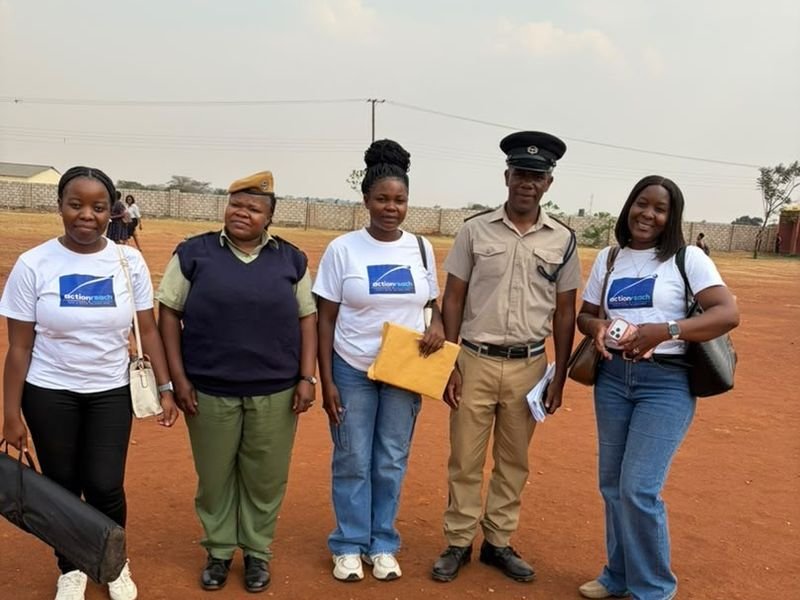
Actionreach team members standing outdoors with a uniformed officer
Being honest about limits

What the model is not

  • It is not a promise that ActionReach will directly provide every health, education or protection service.
  • It is not a substitute for Government responsibilities, professional clinical care or statutory child-protection processes.
  • It is not a rigid linear process: urgent needs may require immediate action, and a child may enter through Lifeline.
  • It is not a reason to collect unnecessary personal data. Information is limited to what is needed, protected and handled responsibly.
  • It is not a guarantee that every case will have the same outcome or timeline. Cases differ, and constraints are reported honestly.

Explore our workFrequently asked questions

Partner with us

No single organisation can remove every barrier a child faces. If your organisation shares our commitment to every child’s dignity and rights, we would welcome a conversation.