Home / Our work
Our work

Our work

Two entry points and three connected programme pillars, with safeguarding and inclusion throughout.

Our work

Two entry points and three connected programme pillars

This structure helps visitors understand both how a child comes into contact with us and the areas in which we coordinate support. Cross-cutting commitments (safeguarding, inclusion, child participation, accountability and voluntary spiritual nurture) apply across all programmes.

Entry point 1 · Our signature entry point

Birth Registration & Legal Identity

A birth record helps make a child visible and recognised. ActionReach works with caregivers and relevant authorities to help families understand and navigate birth-registration processes, identify missing documentation and follow the process through to confirmation. Legal identity is our signature entry point because a child who is not recognised in systems can be missed by the services and protections intended for them.

About birth registration
Entry point 2 · When a child needs help now

Lifeline

Some children first come to our attention because of an urgent or unmet health, nutrition, education or protection need. Lifeline provides an alternative entry point so that a child is not turned away or delayed simply because they do not have a birth record. We assess the immediate concern, take appropriate safeguarding steps and coordinate with the responsible service providers.

About Lifeline
Programme pillars

Three connected pillars

Health & Nutrition

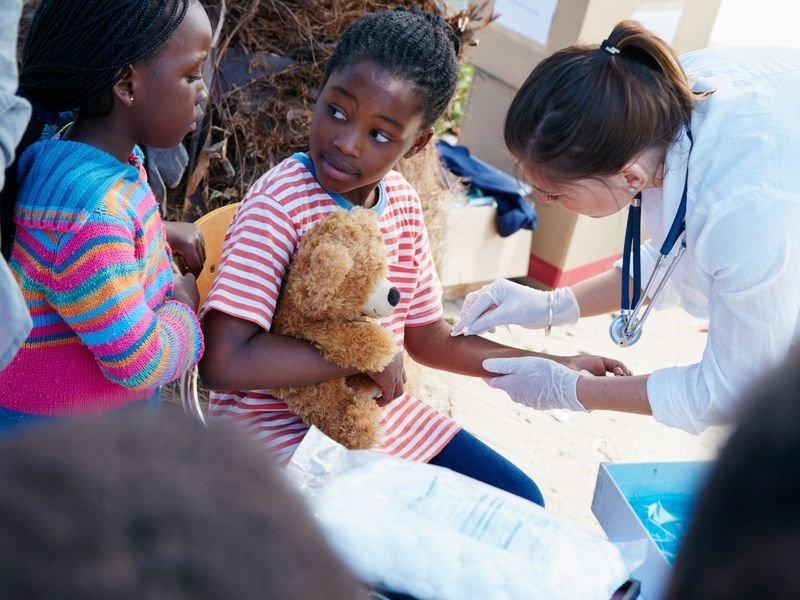
We help children and caregivers overcome barriers to appropriate health and nutrition support by identifying unmet needs, supporting navigation and follow-through with health facilities and relevant providers, and checking whether agreed care was accessed.

Read more about Health & Nutrition
Cross-cutting programmes

Five commitments applied throughout the child’s journey

The 2026–2031 approach identifies five cross-cutting programmes. They are not separate doors a family must pass through; they are commitments applied throughout the child’s journey.

  • Child protection

    Safeguarding the child’s safety, responding appropriately to concerns and ensuring that protection risks inform decisions at every stage.

  • Disability inclusion

    Identifying and addressing physical, communication, attitudinal and procedural barriers that may exclude children with disabilities.

  • Gender equality

    Recognising that girls and boys may face different risks and barriers, and ensuring that responses are fair, safe and responsive to those differences.

  • Resilience

    Strengthening the conditions, relationships and service connections that help children and families maintain progress when circumstances change.

  • Voluntary spiritual transformation

    Expressing ActionReach’s Christian identity through service, hope and values-led relationships, while ensuring that any spiritual engagement is freely chosen and never a condition for assistance.

Faith, community and voluntary spiritual nurture

Our faith motivates our service. It is never a condition of help.

ActionReach’s faith identity shapes its commitment to compassion, dignity, service and justice for children. Churches and faith leaders can be trusted community partners who help identify children who are overlooked and encourage communities to act. Our services, however, are offered freely and without discrimination. No child or caregiver must attend worship, receive prayer, disclose religious belief or participate in spiritual activities to access assistance. Any spiritual engagement is voluntary, respectful and led by the wishes of the child and family, consistent with safeguarding.

Cross-cutting commitments

How we hold ourselves to account

Child safeguarding

Every activity must protect children from harm, exploitation, abuse and inappropriate disclosure. ActionReach will publish its approved safeguarding policy and a clear, functioning way to raise a concern once the reporting channel has been tested. Safeguarding

Gender equality and equity

We pay attention to how gender, age, disability, poverty, location and household circumstances can affect a child’s access to support. Programme decisions are guided by need, rights and safety.

Child participation

Children are listened to in ways appropriate to their age, maturity, communication needs and safety. Participation is not tokenistic: children’s views inform plans and feedback where possible.

Privacy and responsible data use

Children’s information is sensitive. We collect only what is necessary, explain why it is needed, restrict access and use information responsibly. Public reporting uses aggregated data and carefully approved stories.

Accountability and feedback

Children, caregivers, communities and partners should have safe ways to ask questions, provide feedback or raise concerns without fear of retaliation. Feedback and complaints
Partner with us

No single organisation can remove every barrier a child faces. If your organisation shares our commitment to every child’s dignity and rights, we would welcome a conversation.